

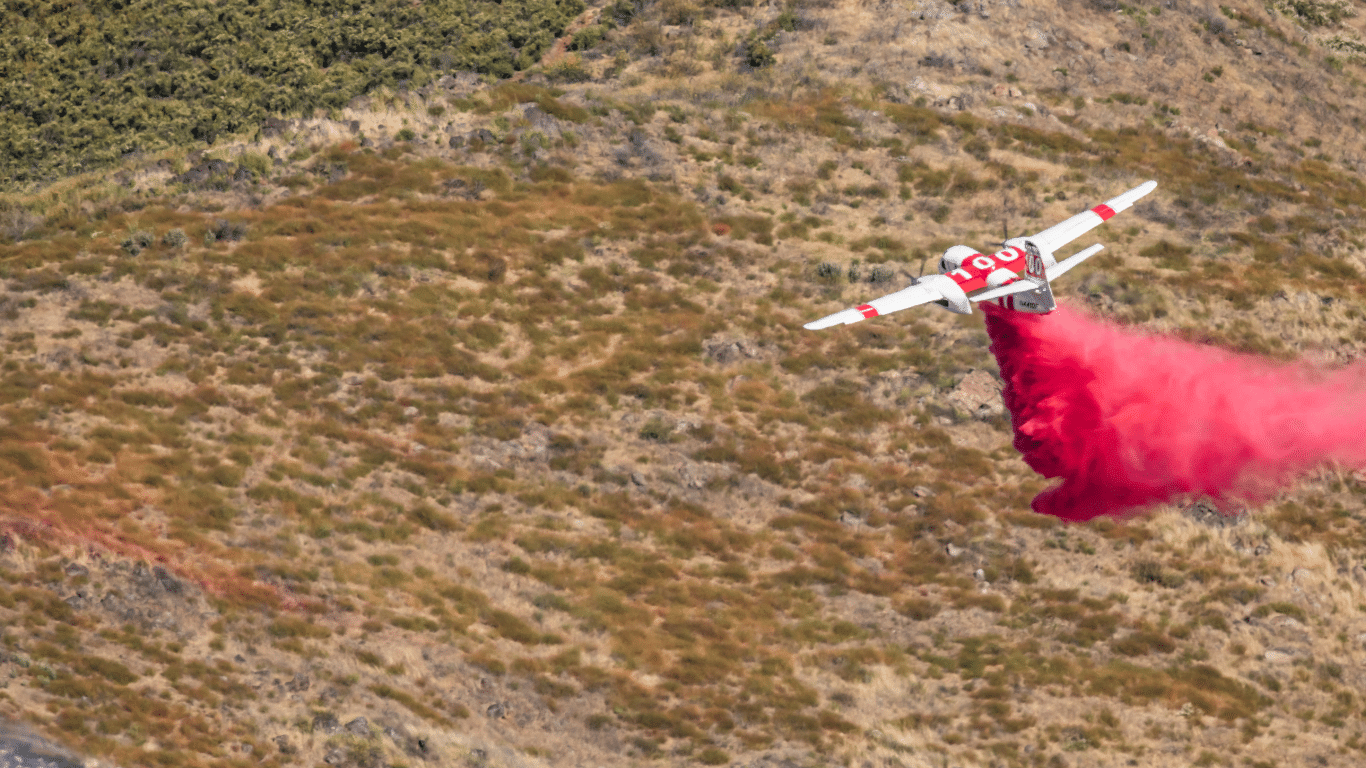
Wildfires pose a grave danger to forests, communities, and wildlife. Today, we know of a variety of fire retardants, such as Phos-Chek or Fire-TrolI, that are key in controlling the spread of fire. However, some of these powerful firefighting tools can also harm natural waterways. To counteract this, non-toxic fire retardant alternatives such as GreenFire®, are designed to extinguish flames while minimizing environmental damage.
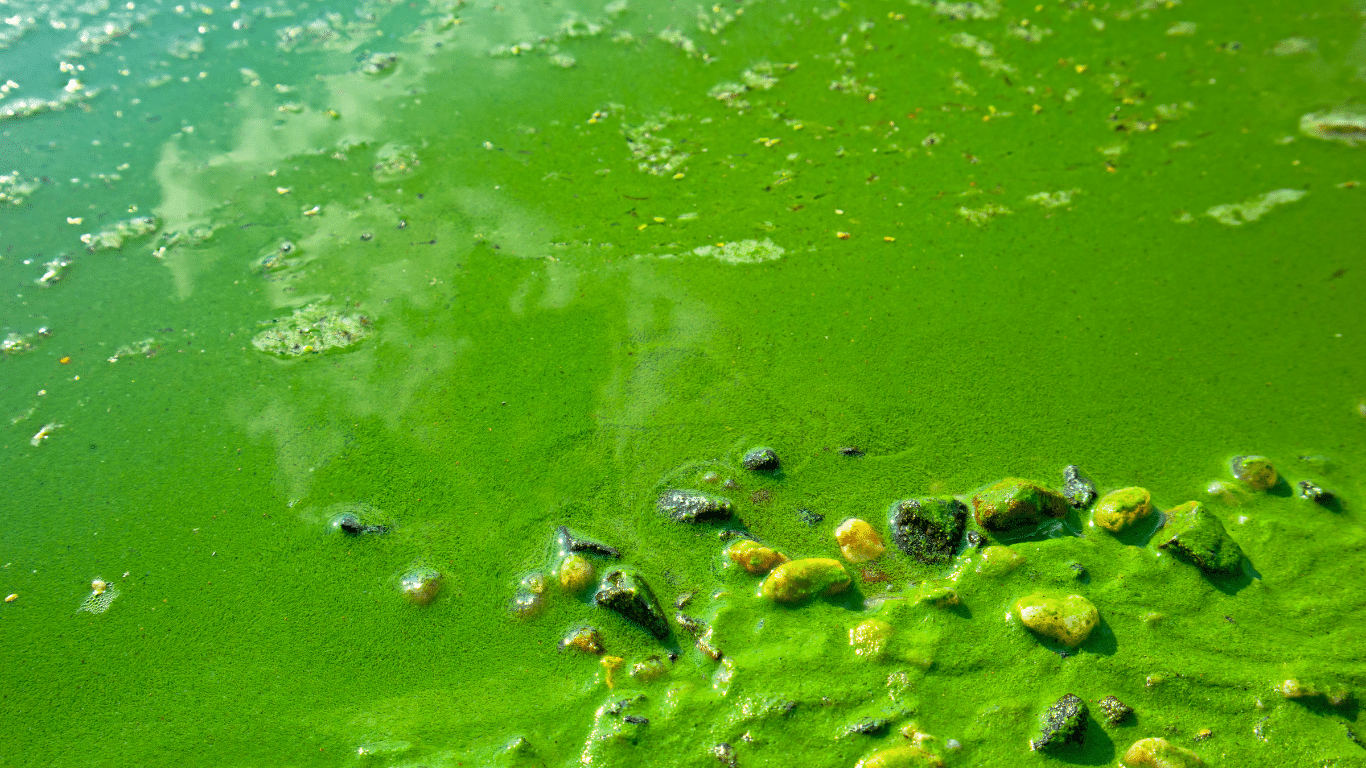
Phosphorus = Fertilizer for Algae
An active component of common fire retardants is often ammonium phosphate, formulated as a slurry with water and additives. Phosphorus is a key “plant nutrient” that acts as a fertilizer in agriculture. In normal amounts, it can be beneficial, even essential, but when too much enters a lake, river, or stream, it becomes a problem.
When waterways receive excess phosphorus and nitrogen, algae, including blue-green algae, can grow rapidly. These algal blooms, or dense mats of algae, can block sunlight from reaching submerged aquatic plants. Later, when the algae die, their decomposition consumes oxygen dissolved in the water. This can result in hypoxia (low oxygen) or even anoxia (absence of oxygen), making the water uninhabitable for fish and other aquatic life.
Therefore, although phosphorus is technically a natural substance, using it in excess disrupts the ecosystem.
Ammonia and Heavy Metals
Another common component found in fire retardants is ammonia. When these retardants enter waterways, especially stagnant ponds or small streams, the concentration of ammonia can be high enough to kill fish and other aquatic organisms.
Further recent research on some fire retardant formulations have found heavy metals like chromium, cadmium, and vanadium at high levels. The mix of phosphate, ammonia and these heavy metals can cumulatively degrade water quality, threaten biodiversity, and disrupt entire aquatic ecosystems.
One recent study calculated the impact of retardants released into water bodies. They found that the concentrations of heavy metals were sometimes well in excess of safe drinking water levels. This is dangerous for aquatic life and human health as well.
Consequences of Algae Blooms for Ecosystems and Waterways
Some consequences of algae blooms include:
● Toxicity: Some algae/cyanobacteria produce toxins harmful to animals, humans, or pets that drink or swim in contaminated water.
● Loss of aquatic life: As oxygen levels drop after algae die and decompose, fish, amphibians, and other aquatic organisms may suffocate.
● Ecosystem disruption: Dense algae can block sunlight, killing submerged plants. The nutrient overload may also favor invasive species over native ones.
● Long-term water-quality degradation: Once nutrients or toxic metals enter a water body, effects can linger. This makes water unsafe for drinking, recreation, or wildlife habitation.
What Waterways Are Especially Vulnerable?
Water bodies like small lakes, ponds, or slow-moving streams are especially at risk because there is little flow to dilute the chemicals. In those conditions, even one drop of retardant or runoff after rainfall can have disastrous results.
In other cases where the quantity of water dilutes the toxicity immediately, the added nutrients remain and can potentially trigger algal blooms days, weeks, or even months later.
Why Choosing Non-Toxic Fire Retardants Matters
Because of the risks involved in using fire retardants, some agencies impose buffer zones around waterways where retardants should not be dropped. However, plant roots can only absorb so much of the excess nitrogen, phosphorus and pesticides before they enter the water. Moreover, buffer zones don’t exist in some areas and accidental drops inside protected areas can happen. When that occurs the consequences can be serious for the waterways.
We cannot escape the fact that wildfires will continue to occur. However, we can take action to protect our environment. One way to do so is to use non-toxic fire retardants. Using environmentally safer products isn’t just about reducing immediate toxicity. It is a proactive step to protect water quality, aquatic life, and ecosystem health long beyond the firefighting event.
GreenFire – An Eco-Friendly Alternative
Enter GreenFire®! All GreenFire® firefighting products are non-toxic and non-carcinogenic, with no PFAS chemicals associated with persistent environmental contamination. Our products contain zero phosphorus. Thus, the major driver of nutrient pollution is omitted from the formula.
Additionally, our products are “practically non-toxic” (the best achievable rating in EPA aquatic-toxicity testing). This means they pose minimal risk to fish, amphibians, and other aquatic life, even if they were to reach waterways.
Although GreenFire® products cannot be used in aircraft drops yet, they are approved to be used in “Bambi Bucket” operations. A Bambi Bucket works as a portable, collapsible water container for helicopters that deliver large volumes of water or foam on and around fires. Operators can mix our wetting agent or foam into the water before dropping the water to increase firefighting effectiveness. Using this method, our products can be applied to specific areas at risk of fire.

We pride ourselves on offering a reliable and effective product that is not only powerful on fires but also gentle on the environment. For more information about our non-toxic fire retardant products or to purchase our eco-friendly line up visit gogreenfire.com
Follow us on Facebook, Instagram, LinkedIn, X and Pinterest for more information about non-toxic fire retardants.